
Ambedkar Jayanti in New Delhi (2026)
eventApril 14 every yearlocation_onNew Delhi, DelhiAlso known as: Bhim Jayanti • Equality Day • April 14
Vedic celebrations for Ambedkar Jayanti 2026 in New Delhi, Delhi are determined by local sunrise, sunset, and Tithi timings calculated for geographical coordinates (28.61°N, 77.21°E).
auto_awesomeThe Essence
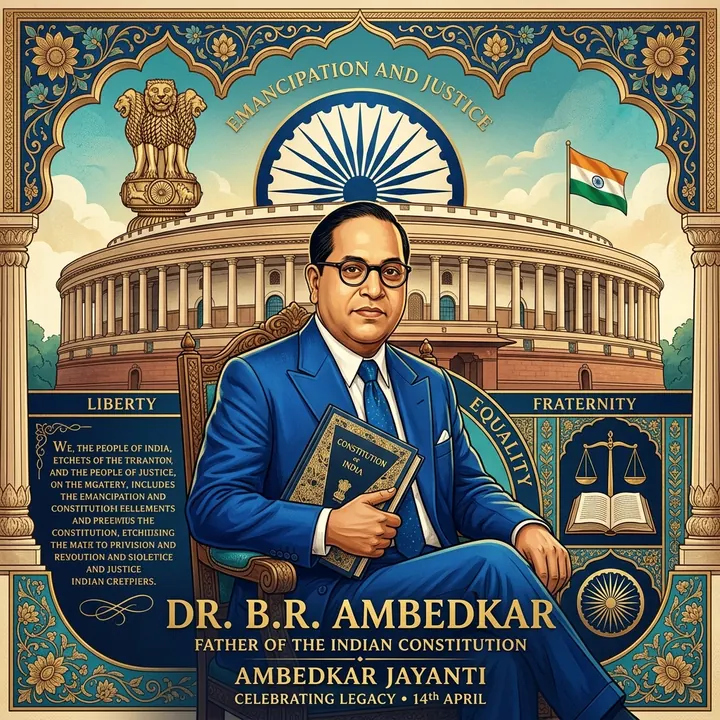
Ambedkar Jayanti, observed on April 14 every year, marks the birth anniversary of Dr. Bhimrao Ramji Ambedkar (1891–1956) — one of the greatest minds and most transformative leaders India has ever produced. He was an economist, jurist, social reformer, Buddhist scholar, and the principal architect of the Indian Constitution. Born into the Dalit 'untouchable' Mahar caste, he faced extreme social discrimination throughout his life but rose to earn multiple PhDs from world-class universities (Columbia University and LSE, London). He fought relentlessly to dismantle caste discrimination and secure equal rights for millions of Dalits and marginalized communities.

History & Legends
From Untouchability to Columbia & LSE
Born on April 14, 1891, in Mhow (now Ambedkar Nagar), Madhya Pradesh, Bhimrao was the 14th and last child of Ramji Maloji Sakpal. His family faced severe untouchability — he was made to sit separately in school, not allowed to touch water sources, and was barred from temples. Despite these crushing barriers, he excelled academically. With the financial support of Maharaja Sayajirao Gaekwad III of Baroda, he went to Columbia University in New York (1913), where he was deeply influenced by Prof. John Dewey. He later attended the London School of Economics, earning a D.Sc. in Economics — an extraordinary academic achievement for any person, let alone one so systematically oppressed.
Drafting the World's Longest Constitution
After Partition and Independence (1947), Jawaharlal Nehru invited Ambedkar to serve as India's first Law Minister and Chairman of the Drafting Committee of the Constitution. Working under immense pressure and failing health, Ambedkar led the drafting of the world's longest written constitution in under three years. He ensured it enshrined equality, outlawed untouchability (Article 17), and provided for affirmative action (reservations) for Scheduled Castes and Scheduled Tribes. He said: 'The Constitution is not merely a lawyers' document. It is a vehicle of life, and its spirit is always the spirit of age.'
Conversion to Buddhism
One of Ambedkar's final and most powerful acts was the mass conversion to Buddhism on October 14, 1956 — Ashoka Vijaya Dashami, Nagpur. He and approximately 600,000 of his followers formally renounced Hinduism, which they felt had used caste to oppress them, and embraced Buddhism — the egalitarian philosophy of the Tathagata (Buddha). He passed away just 65 days later on December 6, 1956, leaving behind a legacy of social justice, educational upliftment, and constitutional democracy.
Spiritual Significance
Ambedkar Jayanti is observed as 'Samta Diwas' (Equality Day) — a reminder that India's progress depends on upholding the constitutional values of justice, liberty, equality, and fraternity that Ambedkar fought for. It is a day to reflect on caste inequality, social justice, human dignity, and the need to build an India where every citizen — regardless of birth — has equal rights, opportunities, and respect.

Regional Celebrations & Customs in New Delhi
Maharashtra (Nagpur & Mumbai)
The most iconic observance is at Chaityabhoomi in Dadar, Mumbai — Ambedkar's memorial — where hundreds of thousands of followers gather from across India. A grand procession is held in Nagpur at Deekshabhoomi, site of the historic 1956 mass conversion.
National Holiday & Government Events
April 14 is a national public holiday in India. The President and Prime Minister pay tributes at Ambedkar's statue in Parliament. Government offices, schools, and colleges organize essay competitions, seminars, and cultural programs about his life and contributions.
Buddhist Communities
Buddhist viharas (monasteries) across India hold prayer meetings, Dhamma discourses, and puja in Ambedkar's memory. Bugle calls, rallies, and cultural processions are organised by Ambedkarite Buddhist organizations.
Universities & Civil Society
Debates, film screenings (Jai Bhim, Dr. Ambedkar), and book exhibitions are held at educational institutions. Ambedkar's writings — particularly The Annihilation of Caste, Riddles in Hinduism, and Buddha and His Dhamma — are especially read and discussed.
Key Rituals & Their Significance
| Ritual | Significance |
|---|---|
| Tribute at Chaityabhoomi & Deekshabhoomi | His cremation and conversion sites are the two holiest spots for Ambedkarites. Pilgrimage visits on April 14 are a deeply emotional act of remembrance. |
| 21-Gun Salute / Bust Garlanding | Statues of Ambedkar across India are garlanded. Government ceremonies include salutes and wreath-laying by the President. |
| Blue Salute | Ambedkar's followers typically wear blue (the Dalit Panthers colour) as a symbol of solidarity, dignity, and identity. |
| Book Reading & Distributing His Works | Distributing free copies of 'Annihilation of Caste' and other works is a common grassroots act of carrying forward his mission of education and liberation. |
New Delhi Quick Facts
| Date | April 14 every year |
|---|---|
| Tithi | April 14 (fixed Gregorian date) |
| Meaning | Birth Anniversary of Dr. B.R. Ambedkar — Architect of the Indian Constitution |
| Location | New Delhi, Delhi |
Share With Family & Friends
Share auspicious Ambedkar Jayanti muhurat timings in New Delhi on WhatsApp.
Share on WhatsAppNever Miss The Date
Add Ambedkar Jayanti to your device calendar for native notifications.