
Bihu in Patna (2026)
eventApril 14–15 (Rongali / Bohag Bihu — the major festival)location_onPatna, BiharAlso known as: Rongali Bihu (Bohag Bihu) • Kongali Bihu (Kati Bihu) • Bhogali Bihu (Magh Bihu) • Xaahi Bihu
Vedic celebrations for Bihu 2026 in Patna, Bihar are determined by local sunrise, sunset, and Tithi timings calculated for geographical coordinates (25.59°N, 85.14°E).
auto_awesomeThe Essence
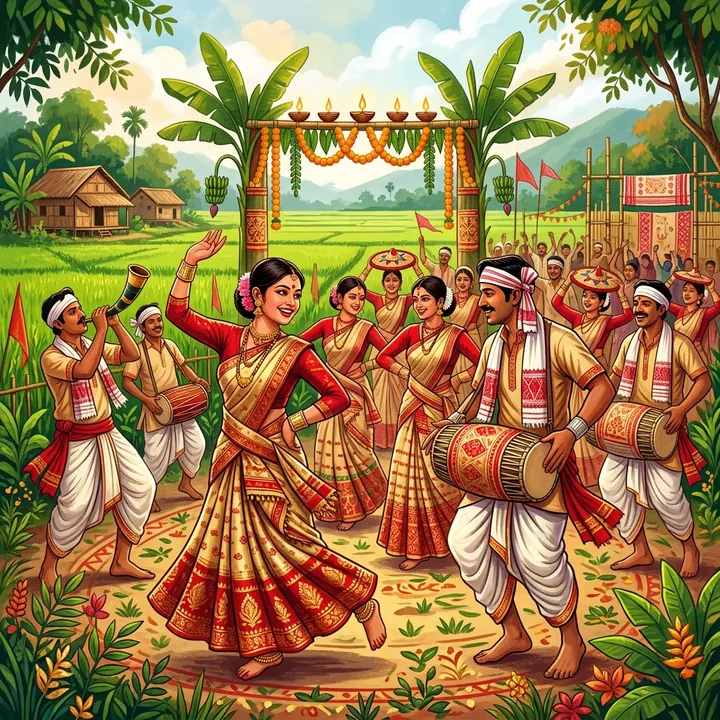
Bihu is the collective name for Assam's three most important agricultural festivals, each marking a different phase of the farming cycle. Rongali Bihu (Bohag Bihu, April) is the Assamese New Year — the most festive, celebrated with joy, music, dance, and romance as the spring planting season begins. Magh Bihu (Bhogali Bihu, January) is the harvest thanksgiving — the most food-centric, marked by community feasting and bonfires. Kati Bihu (Kongali Bihu, October) is the somber, lean-season festival when the crops are still growing and lamps are lit in the fields to protect them. Together the three Bihus encapsulate the entire rhythm of an agricultural year. Bihu dance — performed by young women in striking red and white (mekhela sador) — is one of India's most celebrated classical folk dances.

History & Legends
The Gamosa — Assam's Most Sacred Textile
The gamosa (literally 'body wipe') is a handwoven white cotton towel with red borders and motifs. Its importance in Assam transcends its material form — it is offered to gods, placed on the shoulders of honoured guests, given to elders as a mark of respect, gifted between lovers during Bihu, and draped on the heads of Bihu dancers. A golden gamosa was offered to PM Narendra Modi, President Droupadi Murmu, and the Dalai Lama during official state visits to Assam. It is Assam's identity symbol, and its weaving is a living tradition practiced across the Brahmaputra valley.
Magh Bihu — The Great Feast
Magh Bihu (January) is when Assam's granaries are full after the harvest. The night before Magh Bihu, young men build a Meji — a large thatched structure of bamboo, straw, and wood. They sleep in the Bhelaghar (temporary hut) nearby, cooking and feasting through the night. At dawn, they light the Meji (bonfire), and everyone encircles it, offering til (sesame), betel nut, and husked rice to the fire. They pray for a good season ahead. The feast that follows — pitha (rice cakes: Til Pitha, Ghila Pitha, Sunga Pitha), laru (coconut or sesame balls), curd, and meat — is the most food-oriented of all Bihu celebrations.
Spiritual Significance
Bihu is the festival that contains Assam — its paddy fields, its Brahmaputra river culture, its silk weaving tradition, its cattle herding heritage, and its celebration of youth and romance. The Bihu nritya (dance) performed by young women is not a temple offering — it is a celebration of vitality, femininity, and seasonal joy. Unlike most Indian classical dance forms, Bihu has no religious iconography; it is pure folk expression. The Guinness Record for the largest Bihu dance was set in Guwahati in 2023 — 11,304 dancers performing simultaneously.

Regional Celebrations & Customs in Patna
Guwahati & Assam (Rongali Bihu)
The Brahmaputra riverbanks come alive. Bihu melas (fairs) with traditional music, dance competitions, and wrestling (Musti Yuddha) are held across the state. The largest Bihu mela at Latashil playfield in Guwahati draws lakhs. Traditional Bihu songs (geet) are performed in open grounds with dhol (drum) and gogona (jaw harp).
Bodoland (Bodo community Bihu)
The Bodo community — one of Assam's earliest indigenous peoples — celebrate Bihu (called Bwisagu in Bodo) with distinct Bodo dances and music. Traditional Bodo silk (Dokhona) is worn. Bodo pithas (rice cakes) and Zu (rice beer) are shared at community gatherings.
Assamese Diaspora (Worldwide)
Bihu associations across the world — USA, UK, Australia, Canada, and across Indian cities — organize Bihu melas. The Assam Association of Kolkata's Bohag Bihu is one of the largest pan-India diaspora Bihu events, drawing the Assamese community from across the country.
Tea Garden Communities
Assam's famous tea gardens — Jorhat, Dibrugarh, Tinsukia — have their own Bihu celebrations. The tea garden workers (predominantly Adivasi communities brought from Jharkhand in the colonial era) have developed their own Bihu fusion traditions over 150 years.
The 5 Days of Celebration
- fiber_manual_recordGoru Bihu (Day 1 — Cow Bihu)The day before Rongali Bihu is dedicated to cattle. Cows and bullocks are taken to rivers and bathed with carefully prepared herbal pastes — gourd, ginger, turmeric. They are fed special foods, their horns are oiled, and new ropes are tied around their necks. This reflects Assam's deep agrarian relationship with cattle.
- fiber_manual_recordManuh Bihu (Day 2 — People's Bihu)The main Bihu day. People bathe and wear new clothes (preferably traditional Assamese textiles — silk mekhela sadors for women, dhoti-gamosa for men). Elders are touched at the feet and presented with the sacred gamosa (handwoven towel) as a mark of respect. Young people exchange gamosas as tokens of affection.
- fiber_manual_recordGosain Bihu (Day 3 — Gods' Bihu)The household deities are worshipped. Prayers are offered in the tulsi courtyard. The season of Bihu music and dance (Bihu geet, Husori singing groups going door-to-door) continues for the entire month of Baisakh.
Patna Quick Facts
| Date | April 14–15 (Rongali / Bohag Bihu — the major festival) |
|---|---|
| Tithi | Three times a year — Bohag Bihu (Baisakh/April), Magh Bihu (January), Kati Bihu (October) |
| Meaning | Assam's Triple Harvest Festival — New Year, Sowing, Thanksgiving |
| Location | Patna, Bihar |
| Deities | Surya (Sun God — Magh Bihu) Brahma (creator — harvest prayers) Bhu-devi (Earth Goddess) Ancestors (venerated during Bihu rituals) |
Share With Family & Friends
Share auspicious Bihu muhurat timings in Patna on WhatsApp.
Share on WhatsAppNever Miss The Date
Add Bihu to your device calendar for native notifications.