
Eid ul-Fitr in Varanasi (2026)
eventApril / May (shifts ~11 days earlier each Gregorian year)location_onVaranasi, Uttar PradeshAlso known as: Meethi Eid • Sweet Eid • Eid al-Fitr • Choti Eid
Vedic celebrations for Eid ul-Fitr 2026 in Varanasi, Uttar Pradesh are determined by local sunrise, sunset, and Tithi timings calculated for geographical coordinates (25.32°N, 82.97°E).
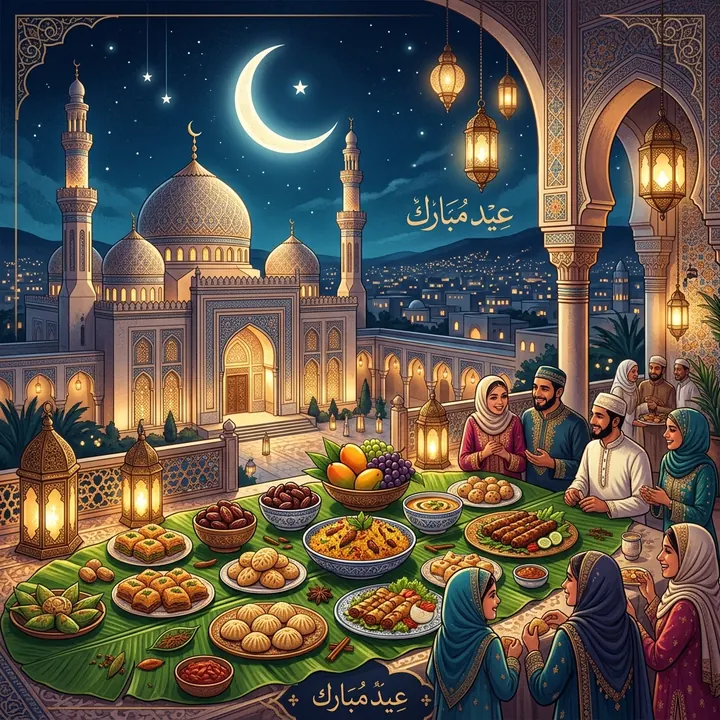
auto_awesomeThe Essence
Eid ul-Fitr — the Festival of Breaking the Fast — is the most joyous celebration in the Islamic calendar, marking the end of Ramadan, the holy month of fasting, prayer, and reflection. For 29 or 30 days Muslims fast from pre-dawn (Sehri/Suhoor) to sunset (Iftar), abstaining from food, water, and other physical needs. Eid ul-Fitr is the reward: the day when all that patience and devotion is celebrated with thanksgiving to Allah, communal prayer, feasting, charity, and the exchange of warm greetings. The date changes every year on the Gregorian calendar because the Islamic calendar is purely lunar, making the year about 11 days shorter.

History & Legends
Ramadan — The Month of the Quran
According to Islamic tradition, the month of Ramadan is when the Quran — the holy scripture of Islam — was first revealed to the Prophet Muhammad (PBUH) through the angel Jibreel (Gabriel) in 610 CE. The revelation began on the night of Laylat al-Qadr ('Night of Power'), believed to fall on one of the odd nights in the last ten days of Ramadan. This night is considered better than a thousand months of worship. Fasting during Ramadan is one of the Five Pillars of Islam — a fundamental obligation for every adult Muslim. Eid ul-Fitr is therefore the celebration of successfully completing this sacred obligation.
The First Eid
The tradition of Eid was established by the Prophet Muhammad (PBUH) when he came to Medina. The people of Medina had two days of celebration carried over from pre-Islamic times. The Prophet said: 'Allah has replaced those two days with two better days: Eid al-Fitr and Eid al-Adha.' The first Eid ul-Fitr is believed to have been celebrated in 624 CE, in the second year after the Hijra (migration to Medina).
Spiritual Significance
Eid ul-Fitr is deeply spiritual and social. The obligatory pre-Eid charity — Zakat ul-Fitr (Fitrana) — must be given by every Muslim household before the Eid prayer so that even the poorest can celebrate. The Eid prayer (Salat al-Eid) is a congregation held in open grounds or mosques, expressing collective gratitude to Allah. The festival dissolves social and economic hierarchy for a day — everyone wears their finest clothes, shares food, and greets each other with 'Eid Mubarak'. It is meant to be a day of complete happiness — no Muslim should go hungry, no grievance should remain unresolved.

Regional Celebrations & Customs in Varanasi
All of India (Universal Muslim Practice)
Before sunrise: Sehri and Tahajjud prayers. Morning: Ghusl (ritual bath), wear new clothes (preferably white), apply itr (non-alcoholic perfume), and proceed to the mosque or Eidgah. The Eid prayer (Salat al-Eid) is followed by the Imam's Khutbah (sermon). Families visit each other, share sewaiyan (vermicelli pudding) and sheer khurma, and exchange Eidi (cash gifts for children).
Hyderabad & Old Delhi
Famous for grand Eid celebrations. Charminar's surrounding lanes in Hyderabad fill with people in stunning sherwanis and ghararas. The Old Delhi lanes of Chandni Chowk and Jama Masjid see massive congregations. Mutton biryani, haleem, phirni, and sheer khurma are served in abundance.
Kerala (Mappila Muslim tradition)
The Malabar cuisine features special Eid dishes: Malabar Biriyani with Kaima rice, Pathiri (rice flatbread), Irachi Stew, Unnakaya (banana-egg fritter). Mosques hold early morning prayers followed by community feasting.
Global Muslim Diaspora
Eid celebrations in the UK (especially Leicester and London), USA, UAE, and Malaysia are massive, with community grounds hosting thousands for Eid prayer, food festivals, and cultural performances.
Key Rituals & Their Significance
| Ritual | Significance |
|---|---|
| Zakat ul-Fitr (Fitrana) | Mandatory charity given before Eid prayer — ensures every Muslim, including the poor, can celebrate. Typically 2.5 kg of staple food or its monetary equivalent per family member. |
| Salat al-Eid (Eid Prayer) | 2-rakat special congregational prayer offered in open grounds (Eidgah) in the morning. Attendance is Sunnah Muakkadah (strongly recommended). |
| Eidi (Gifts for children) | Cash or gifts given by elders to children. A beloved tradition that makes Eid a magical day for Muslim children worldwide. |
| Sheer Khurma / Sewaiyan | The quintessential Eid dessert — vermicelli cooked in milk with dates, dry fruits, and saffron. No Eid morning is complete without it. |
Varanasi Quick Facts
| Date | April / May (shifts ~11 days earlier each Gregorian year) |
|---|---|
| Tithi | 1st of Shawwal (10th month of the Islamic Hijri calendar), after sighting of the new moon |
| Meaning | Festival of Breaking the Fast |
| Location | Varanasi, Uttar Pradesh |
| Deities | Allah (God in Islam) |
Share With Family & Friends
Share auspicious Eid ul-Fitr muhurat timings in Varanasi on WhatsApp.
Share on WhatsAppNever Miss The Date
Add Eid ul-Fitr to your device calendar for native notifications.