
Makar Sankranti in Pune (2026)
eventJanuary 14 (fixed solar date)location_onPune, MaharashtraAlso known as: Uttarayan • Pongal (Tamil Nadu) • Lohri (Punjab) • Magh Bihu (Assam) • Poush Sankranti (Bengal)
Vedic celebrations for Makar Sankranti 2026 in Pune, Maharashtra are determined by local sunrise, sunset, and Tithi timings calculated for geographical coordinates (18.52°N, 73.86°E).
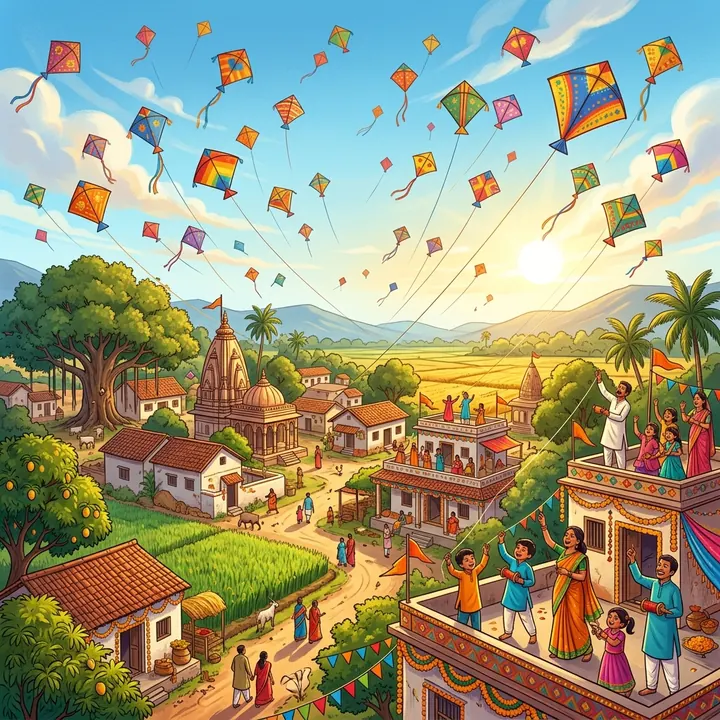
auto_awesomeThe Essence
Makar Sankranti is one of the few Hindu festivals determined by the solar calendar rather than the lunar calendar, making it one of the most consistent festivals — falling on January 14 (or 15 in leap years) every year. It marks the Sun's transit into Capricorn (Makar Rashi), signalling the end of winter and the beginning of longer days. Known as Uttarayan in Gujarat, it is the festival of kites, sesame, and new harvests. Unlike most festivals tied to mythological events, Sankranti is a cosmic astronomical event celebrated with earthly joy.

History & Legends
Surya's Northward Journey (Uttarayan)
According to Hindu scripture, after the winter solstice, Surya Dev (Sun God) begins his northward journey (Uttarayana) through the zodiac. This is considered the most auspicious half of the year. The Mahabharata recounts that the great warrior Bhishma Pitamah, who had the boon of choosing his own death, lay on a bed of arrows waiting for Uttarayan to arrive before finally departing from the world — because dying during Uttarayan guarantees moksha (liberation).
Lord Vishnu Ends the Reign of Demons
Legends in some traditions say that on this day, Lord Vishnu crushed the demons known as Sankarasura, burying their heads under Mount Mandara. This symbolizes the victory of light, warmth, and divine order (Dharma) over the cold, dark forces of winter and evil.
Spiritual Significance
Makar Sankranti marks the beginning of Uttarayan — the six-month period when the Sun moves northward, considered the day of the gods. It is a time to express gratitude to Surya Dev for sustaining all life on earth. The tradition of donating sesame seeds (til) and jaggery (gur), bathing in holy rivers, and flying kites all symbolize releasing the old, welcoming warmth, and sharing abundance with the community. Bathing in the Sangam at Prayagraj on this day during the Kumbh Mela is considered one of the most spiritually powerful acts a devotee can perform.

Regional Celebrations & Customs in Pune
Gujarat & Rajasthan (Uttarayan)
The sky turns into a vast canvas of colour as millions of kites fill the air in a spirit of friendly competition. 'Chikki' (sesame brittles), 'Undhiyu' (mixed vegetable curry), and 'Jalebi' are the festival foods. The night before is the grand 'Uttarayan Eve' with kite-flying by lamplight.
Tamil Nadu (Pongal)
Celebrated as Pongal over 4 days — Bhogi (discarding old), Thai Pongal (cooking new rice), Mattu Pongal (honouring cattle), and Kaanum Pongal (family outing). A special rice dish called 'Pongal' is cooked in a new clay pot and allowed to boil over, symbolizing abundance.
Punjab & Haryana (Lohri)
Celebrated a day before Sankranti as Lohri. A bonfire is lit on the eve of Makar Sankranti, and people dance the energetic Bhangra and Gidda around it, throwing popcorn, peanuts, and sesame seeds into the fire as offerings.
Assam (Magh Bihu)
Celebrated with communal feasting. The night before is 'Uruka' when young people build temporary bamboo huts (Bhelaghar) and feast through the night. The huts are burned at dawn. Traditional Assamese dishes like Til Pitha and Ghila Pitha are made.
West Bengal (Poush Sankranti)
Known as Poush Sankranti. The day is marked by making various types of traditional rice-flour sweets called Pithe — stuffed with sesame, coconut, and date palm jaggery. A significant fair (mela) is held in Shantiniketan.
Uttar Pradesh & Bihar
Holy dip in Ganga and Yamuna rivers is the primary activity. The Magh Mela at Prayagraj draws millions. Khichdi (rice and lentil porridge) is donated and eaten, which is why this festival is also called 'Khichdi' in these regions.
Key Rituals & Their Significance
| Ritual | Significance |
|---|---|
| Til-Gur (Sesame-Jaggery) Sharing | Eating sesame-jaggery and offering it to others symbolizes warmth, sweetness, and goodwill for the coming year. |
| Sacred River Bathing (Snan) | Bathing in rivers like the Ganga, Yamuna, Godavari is believed to wash away sins. Especially powerful at the Triveni Sangam. |
| Kite Flying | The upward journey of the kite symbolizes the soul rising toward the divine during Uttarayan. |
| Annadaan (Food Donation) | Donating khichdi, sesame, blankets, and grain to the poor is considered extremely meritorious on this day. |
Pune Quick Facts
| Date | January 14 (fixed solar date) |
|---|---|
| Tithi | Solar transit of the Sun into Capricorn (Makar Rashi) |
| Meaning | The Sun's northward journey — Uttarayan |
| Location | Pune, Maharashtra |
| Deities | Surya Dev (Sun God) Lord Vishnu |
Share With Family & Friends
Share auspicious Makar Sankranti muhurat timings in Pune on WhatsApp.
Share on WhatsAppNever Miss The Date
Add Makar Sankranti to your device calendar for native notifications.